 22-25 April 2026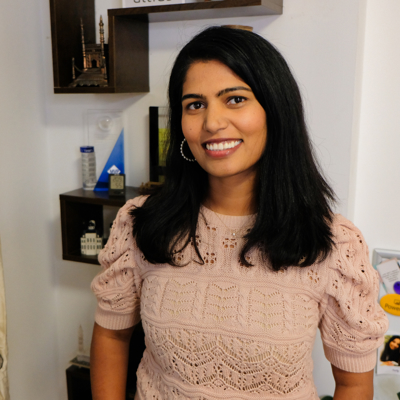
Making Sense of Fabric Capacity: Start, Monitor, Scale
Proposed session for SQLBits 2026TL; DR
"What capacity do we need?" is one of the first questions I get asked. I'll cover how to choose your starting point, monitor effectively, and know when to scale. You'll leave with a decision framework and monitoring checklist.
Session Details
"What capacity do we need?" It's one of the first questions I get asked on almost every Fabric engagement, and one of the hardest to answer without context. But here's what I've learned: the starting point matters less than what happens next.
Too often, organisations pick a capacity, deploy it, and never look at it again. No monitoring. No visibility shared with the people building on the platform. No clear understanding of what's actually included or how to tell when it's time to scale. By the time someone notices a problem, it's usually because something's already slow or broken.
In this session, I'll walk through how I approach Fabric capacity conversations with clients, from the initial "where do I start?" through to ongoing monitoring and knowing when to scale.
We'll cover:
- What's included at each capacity tier and how to think about your starting point
- The tools that matter: Capacity Metrics app, workspace monitoring, Fabric Toolbox, FUAM, and more
- How to read the signals and share visibility with the right people
- Permissions, access, and who needs to see what
- When and how to scale up, down, or pause
You'll leave with a decision framework for choosing capacity, a monitoring checklist, and a clearer picture of the tools available. Whether you're sizing your first Fabric capacity or inheriting one you don't fully understand, this session will give you the grounding you need.
Too often, organisations pick a capacity, deploy it, and never look at it again. No monitoring. No visibility shared with the people building on the platform. No clear understanding of what's actually included or how to tell when it's time to scale. By the time someone notices a problem, it's usually because something's already slow or broken.
In this session, I'll walk through how I approach Fabric capacity conversations with clients, from the initial "where do I start?" through to ongoing monitoring and knowing when to scale.
We'll cover:
- What's included at each capacity tier and how to think about your starting point
- The tools that matter: Capacity Metrics app, workspace monitoring, Fabric Toolbox, FUAM, and more
- How to read the signals and share visibility with the right people
- Permissions, access, and who needs to see what
- When and how to scale up, down, or pause
You'll leave with a decision framework for choosing capacity, a monitoring checklist, and a clearer picture of the tools available. Whether you're sizing your first Fabric capacity or inheriting one you don't fully understand, this session will give you the grounding you need.
3 things you'll get out of this session
- What's included at each capacity tier and how to think about your starting point
- The tools that matter: Capacity Metrics app, workspace monitoring, Fabric Toolbox, FUAM, and more
- How to read the signals and share visibility with the right people
- Permissions, access, and who needs to see what
- When and how to scale up, down, or pause
- The tools that matter: Capacity Metrics app, workspace monitoring, Fabric Toolbox, FUAM, and more
- How to read the signals and share visibility with the right people
- Permissions, access, and who needs to see what
- When and how to scale up, down, or pause
Speakers
Prathyusha(Prathy) Kamasani's other proposed sessions for 2026
Building End-to-End Data Analytics Solutions with Microsoft Fabric and Open Data - 2026
Designing Power BI Templates for Adoption - 2026
Fabric BI Architecture: Patterns, Workspaces, and Trade-offs - 2026
Fabric Tenant Settings: The Decisions Behind What's Open and What's Closed - 2026
Prathyusha(Prathy) Kamasani's previous sessions
One dataset and three use cases with Microsoft Fabric
Are you curious about how to leverage Open Data with Fabric? In this demo filled session, I will show you how I import World Bank Open Data into Fabric using different methods: Pipelines, Data factory Gen-II, Notebooks and a mix of all three. Then I will demonstrate how I do modelling using Warehouse, Power BI Dataset model and Notebooks. Finally, I will create stunning reports using Power BI.
By the end of the session, attendees will get an idea of how each artifact would work, why one would use one over other artifacts, and understand how to create an end-to-end solution with Microsoft Fabric
Powering Up Your Power BI Development Workflow with Microsoft Fabric Notebooks
Are you excited about Microsoft Fabric and its Notebooks feature, but also feel overwhelmed by the different languages it supports, this session is for you. You will learn the basics of Python and Spark, and how to use Notebooks to write and run code. You will also discover how to leverage tools like CoPilot to assist you with code suggestions and corrections. Moreover, you will see how to use libraries like SemPy to enrich your Power BI development with advanced analytics. Join Prathy in this session and get ready to explore the possibilities of Notebooks in Microsoft Fabric.
Demystifying Power BI Slicers and filters
When it comes to Power BI Reports design, both slicers and filters have their own space and use cases. However, Slicers and filters are probably among the most frequently misused terms in Power BI design.
In this session, we will start with what are Power BI Slicers and filters. What are the differences between and when to use what? We will investigate the pros and cons of each and how to get the best of both filters and slicers in Power BI.
By the end of the session, attendees will get an overall view of Power BI slicers and filters in Power BI designing.
Power BI bookmarks in 20 minutes
In this 20 minute session, you will learn everything you need to know about bookmarks. We will start with creating your first bookmark to multiple bookmarks by understanding advanced settings that usually get overlooked. We will also look at how we can ease the design and Maintainance of bookmarks by using features like grouping, renaming, selection pane, and naming conventions. By the end of the session, you will learn to apply bookmarks like a pro!
Power BI Report design Tips and Tricks
A demo's filled session packed with tips and tricks to show how to transform usual Power BI reports to stunning reports
Introduction to PowerApps and Integration with Power BI
In this session, attendees learn about how to create PowerApps solutions, how to use PowerApps as data entry application for Power BI. How to integrate PowerApps in Power BI and Power BI in PowerApps.
Power BI deployment strategy for publishing and maintenance
It takes minutes to create and share Power BI reports and users who has relevant Power BI access can do many things in the PBI service. In this session, Prathy will show how having a deployment strategy helps maintaining Power BI service.
Deep Dive into SSIDB Catalog
A session to understand the available functionality of SSISDB Catalog